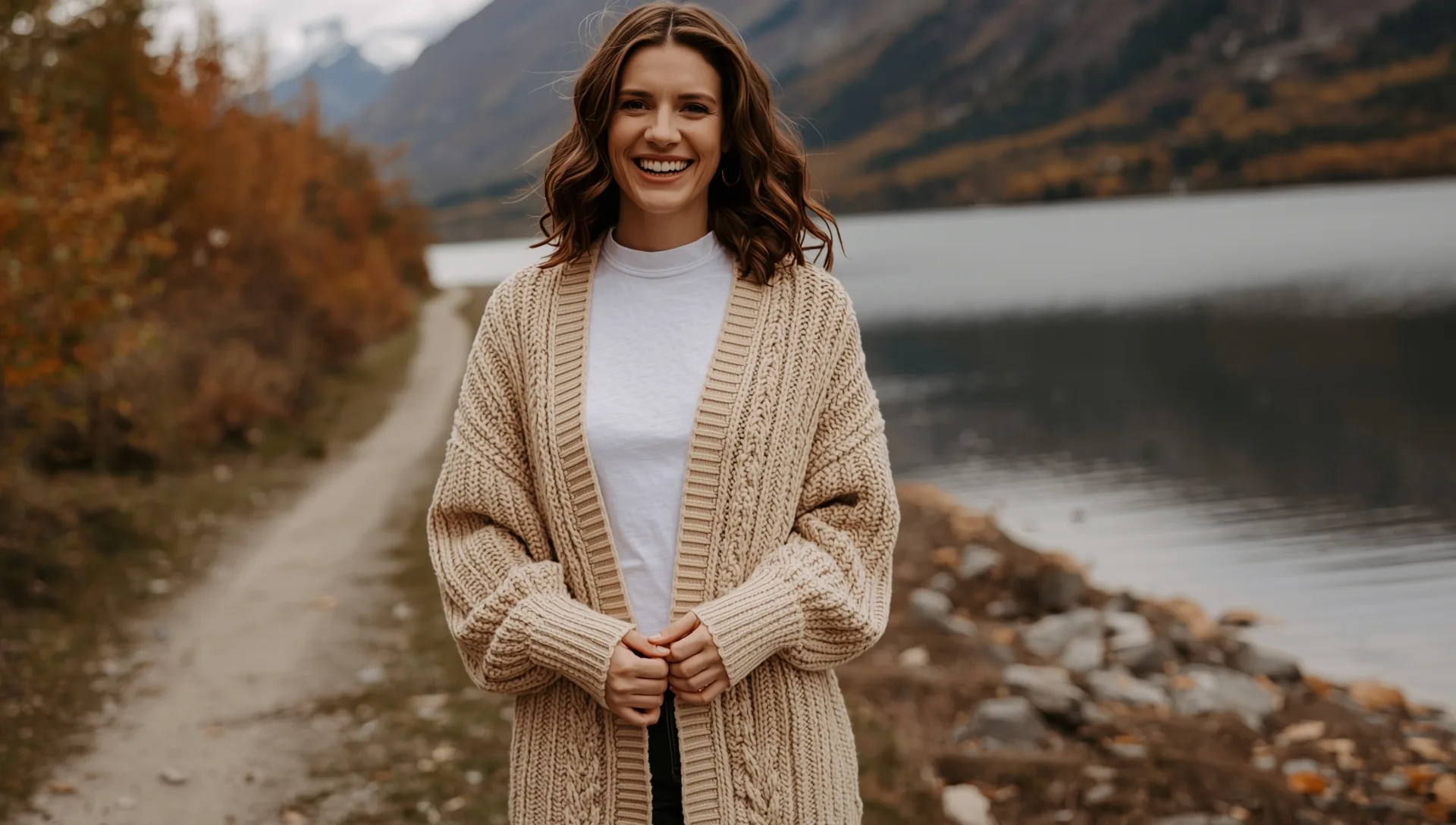
Two heroes, chosen to cover a whole season
The oversized open-front chunky knit is the cold-weather anchor. Open-front construction means no buttons to fuss with and a drape that layers cleanly over tees, turtlenecks, and dresses alike. A chunky gauge traps more air between stitches, which is what actually keeps you warm — thickness is insulation, not just texture. In neutral tones it pairs with nearly everything already hanging in a working wardrobe, which is the entire point of buying it.
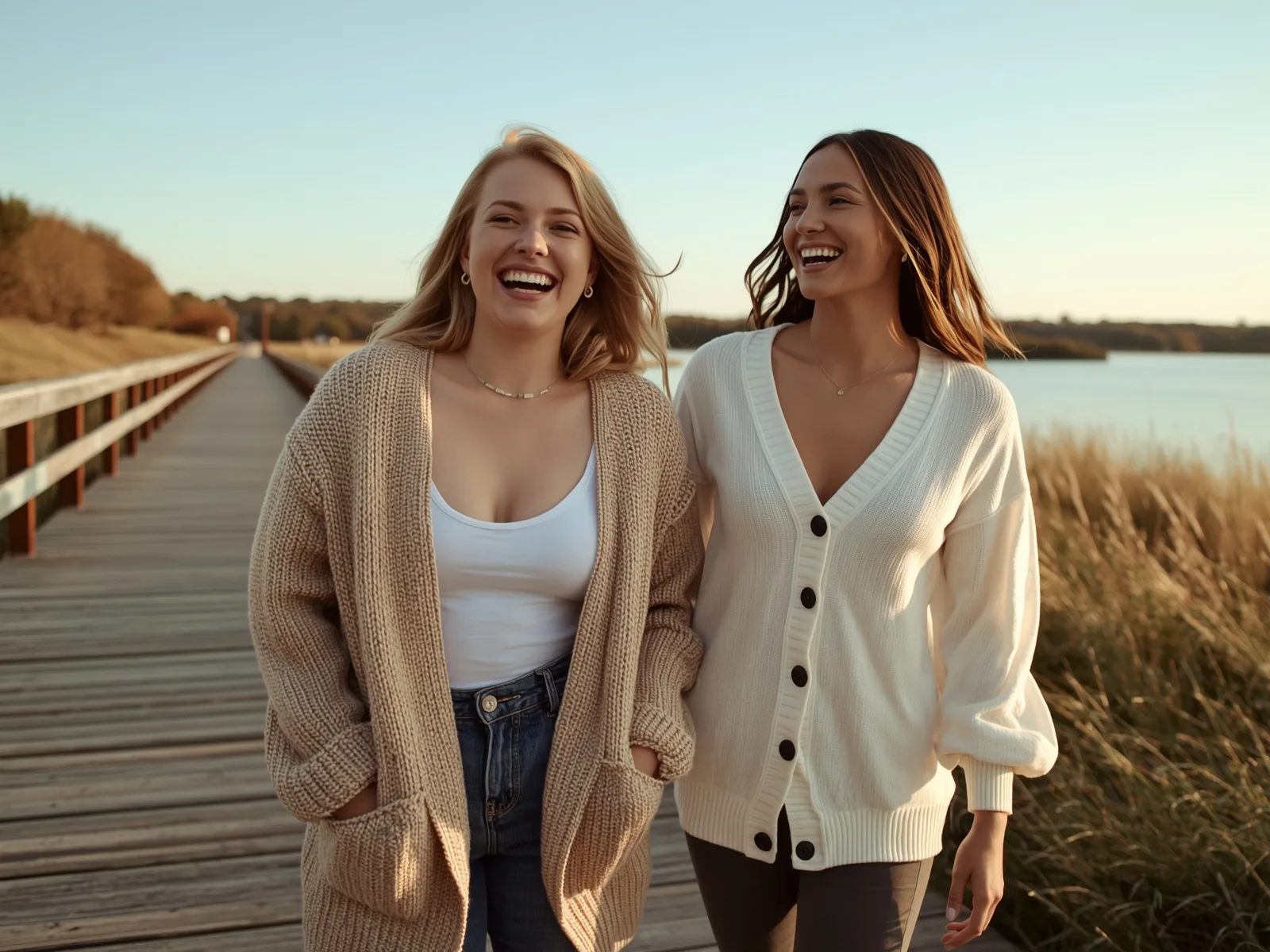
The lightweight balloon-sleeve button cardigan is the workhorse for the other half of the year. A finer gauge keeps it breathable through shoulder seasons and air-conditioned offices, the button front lets it read polished when closed and casual when open, and the balloon sleeve adds shape without bulk. Comparable styles at mainstream retailers sit around the mid-fifty-dollar mark, and this one lives in the same $35–55 band on purpose.
Together the two cover the widest practical range a two-cardigan closet can: one for real cold, one for everything else. That is a deliberate merchandising decision, not a limited catalog — depth over sprawl.
Cardigan styles, decoded in plain terms
A cardigan, practically defined, is a knitted layer that opens at the front — buttoned, zipped, or worn open. From there the style names multiply fast: cropped cuts that end at the waist and increasingly get worn as tops in their own right, oversized and chunky knits built for drape and warmth, open-front styles with no closure at all, classic button-fronts, and longline or duster lengths that fall past the hip toward the knee. Ribbed, hooded, and cardigan-jacket hybrids round out the family.
Demand across mainstream retail concentrates on three of these: lightweight, oversized, and cropped. Our two heroes deliberately serve the first two, and the fit guide further down explains when a cropped cut earns a place instead.
On color: neutrals do the most work in a mainstream closet — cream, oatmeal, charcoal, black — because they pair with denim, trousers, and dresses without negotiation. Pastels and jewel tones are seasoning; stripes and Fair Isle patterns are statements. Build the base in neutrals first, which is exactly where our hero colorways live.
Built for the wardrobe-builder
You are not collecting cardigans; you are assembling a wardrobe that works. You want pieces that pair with what you already own, in mainstream sizes, at prices that do not require a justification speech. That is the reader this page is written for.
The value tier is often treated as an afterthought — thin grids ranked on brand recognition, with sizing charts and little else. We think the $35–70 shopper deserves the same depth of guidance that luxury knitwear pages lavish on $300 pieces. The systems below are that guidance, written for real budgets.
The weight-to-season system

Nobody at any price tier publishes a usable rule for matching knit weight to weather — pages gesture at 'fabric weights for all seasons' and stop. Here is the system, plainly. Knit weight is the combination of yarn thickness and gauge (stitches per inch): chunky knits are thick yarn at low gauge, mid-weights sit in between, and lightweight knits are fine yarn at high gauge. Thicker and looser traps more air; finer and tighter breathes better. That single fact drives every recommendation that follows.
Weight bands, mapped to temperature
Chunky (the open-front hero): reach for it when highs sit below roughly 50°F — deep autumn through winter, and cold evenings on either side. It functions as light outerwear on dry days.
Mid-weight: the 50–65°F band — classic spring and fall daytime, or winter indoors in a drafty building.
Lightweight (the balloon-sleeve hero): 65°F and up, which includes most of the year indoors. It is the layer you carry rather than wear, until the room decides otherwise.
The office-AC rule and the transitional-month rule
The office-AC rule: commercial buildings are commonly cooled into the low seventies Fahrenheit year-round, so a lightweight cardigan earns desk-drawer residency in every season — its job is the gap between the thermostat and your comfort, not the weather outside.
The transitional-month rule: in months where mornings and afternoons disagree by fifteen degrees or more, default to the lighter weight and add a scarf or jacket for the cold end. Overshooting warmth mid-afternoon is the more common regret, and a light layer plus an accessory adjusts in seconds.
Chunky vs mid vs light — the cheat sheet
Chunky earns the day when: highs under 50°F, outdoor plans, or it is doing coat duty. Mid earns it when: 50–65°F, all-day errands, unpredictable indoor heating. Light earns it when: 65°F and up, office days, travel days, and any month with an air conditioner in it. If you own only our two heroes, the rule compresses to one line: chunky below fifty, light above it, and the light one lives at work.
Fit and length, decided by your outfit — not by the model photo
Retailers claim 'flattering on every body type' and then offer no method. Here is the method. Length first: a cropped cardigan ends at or above the natural waist, a regular cut at the hip, a longline anywhere from mid-thigh to knee. The deciding input is not your height — it is the proportions of the outfit underneath.
With high-rise jeans or trousers, a cropped or waist-length cut keeps the waistline visible and the silhouette balanced. With mid-rise bottoms or untucked tops, a regular hip-length cut is the safe default. Over dresses, match hem logic: shorter dresses take regular lengths, midi and maxi dresses can carry a longline without swallowing the shape.
Open-front versus button-front is a wearing-style question, honestly answered: if you know you will never button it, buy the open-front and enjoy the cleaner drape. Buttons earn their place only if you will actually close them — a buttoned cardigan reads more polished, which is why the lightweight hero has them and the lounge-weight chunky does not.
On sizing honesty: mainstream brands cut generously and inconsistently, and an oversized style bought in your usual size is already oversized — sizing up twice rarely improves it. Where the value tier genuinely leads is range: extended sizing up to 4X and numeric 30 is now table stakes at the biggest value retailers, and we hold our heroes to that same standard of range.
Living with it: care that keeps knits looking new
Category pages at every tier skip care entirely, which is strange, because care is where a $50 cardigan either becomes a five-year staple or a one-season regret. Cotton and cotton-blend knits tolerate machine washing on cold and gentle; wool blends want hand washing or a machine wool cycle with wool-safe detergent, and neither should ever meet a hot dryer — heat is how knits shrink and felt. Dry flat on a towel, reshaped while damp; hanging a wet knit stretches the shoulders permanently.
Pilling is friction, not defect — every knit pills where arms rub. A fabric shaver or pilling comb removes it in two minutes a month and restores the surface completely. Store knits folded, never on hangers, and give wool blends a season-end wash before storage. That is the whole regimen: wash cold and gentle, dry flat, de-pill monthly, fold. Fifteen minutes a month protects the entire knitwear budget.
When to spend more — and when the value tier honestly wins
Cashmere and fine merino buy you a softer hand, a lighter warmth-to-weight ratio, and drape that synthetic blends cannot fully imitate. If a cardigan is going to live against your skin daily and you have the budget, premium natural fibers are a defensible spend — that is simply true, and pretending otherwise would make everything else on this page less trustworthy.
But the value tier wins more often than the price ladder suggests. For a layer worn over other clothes, blend fabrics hold shape well, wash more forgivingly, and survive real life — bags, seatbelts, washing machines — with less anxiety. At $35–70 you can own both weights for less than one mid-premium piece, which for a wardrobe-builder is usually the smarter allocation. Spend up for next-to-skin luxury; spend here for the rotation that does the daily work.